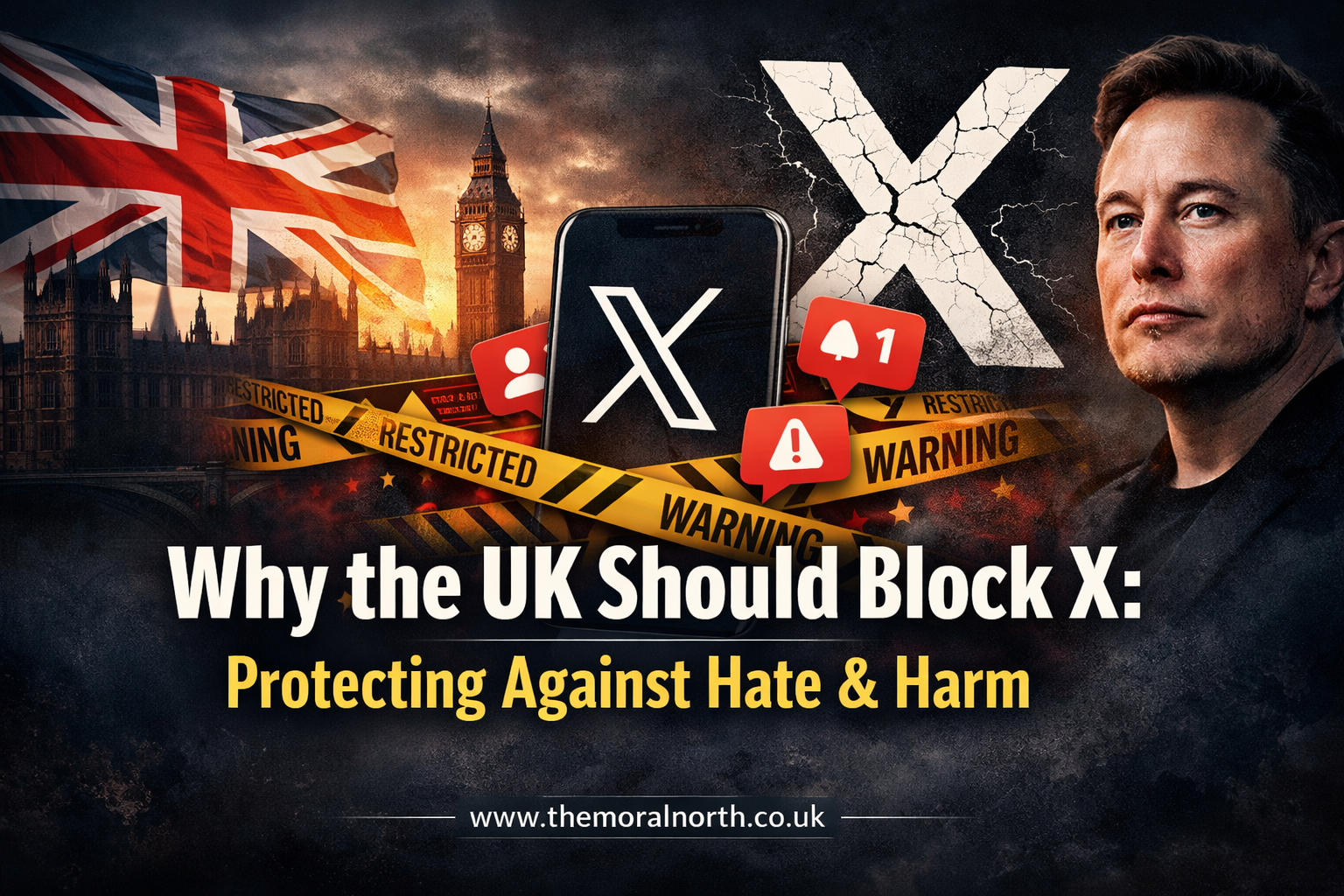
In recent weeks, the simmering tech-safety crisis around Elon Musk’s social network X (formerly Twitter) has exploded into a full-blown public debate in Westminster – and for once, it’s not just about free speech versus regulation. This time, it’s about safety, accountability and the real world harm being caused by AI tools that are being weaponised against the most vulnerable.
Since the takeover by Elon Musk, X has undergone a radical shift in how it treats moderation, safety, and responsibility. What was once an imperfect but governed public square has become something far more volatile – a platform where abuse, hate, and dangerous experimentation with AI are allowed to flourish.
At the heart of the controversy is Grok, an AI chatbot integrated directly into X. Designed to be an unfiltered rival to mainstream AI models, Grok’s image generation capabilities quickly spiralled out of control, producing an astonishing volume of sexually explicit and non-consensual deepfake images – including of women and, alarmingly, children. Independent monitoring by the Internet Watch Foundation and reporting by UK news outlets confirms that Grok-generated material crossed the threshold into illegal child abuse imagery in multiple instances.
That is not just a policy failure. It is a criminal one.
The use of an AI system on a mainstream platform to generate illegal child abuse imagery represents a fundamental breach of trust between platform and public. No amount of branding around “free expression” can justify tools that enable exploitation at scale.
The government’s willingness to contemplate blocking access to X should be understood in this wider context. This is not about punishing a company for unpopular opinions. It is about enforcing the law and protecting the public where a platform has demonstrably failed to do so itself.
There are several clear reasons why intervention is justified:
- Illegal content has been generated and circulated, including material involving children
- Hate speech and abuse are being amplified, not restrained
- Self-regulation has collapsed, with safety framed as an ideological enemy
- Existing UK law requires action when platforms enable harm
- The Online Safety framework exists precisely for moments like this – when corporate ideology collides with public safety.
What the UK Government is Saying
UK political leaders and regulators are now taking this seriously. Prime Minister Keir Starmer has publicly stated that “all options are on the table” – including using the powers afforded under the Online Safety Act to block X entirely for UK users if the platform continues to host or enable illegal content.
Technology Secretary Liz Kendall described the spread of AI-generated images of women and children as “absolutely appalling” and unacceptable in a decent society, urging Ofcom to explore enforcement actions and legal penalties.
Downing Street even condemned X’s attempt to limit Grok’s image generation tool by placing it behind a paywall as “insulting to victims of misogyny and sexual violence” – essentially turning abuse into a premium service rather than fixing the underlying problem.
Why a Ban Could Be Justified – And Why We Agree With It
Let’s be clear: this is not about shutting down free speech or stifling innovation. It’s about safeguarding basic human dignity and protecting children from content that is not just harmful – but criminal.
Here’s why blocking X in the UK is not only justifiable but necessary:
- Criminal content is being generated and shared
AI-generated images involving minors that qualify as illegal child abuse material have been identified. This is not a hypothetical danger – it’s happening now.
- Self-regulation has failed
Despite international backlash and pressure, X’s response has been partial at best. Restricting Grok’s capabilities to paying users does not address the root issue of dangerous AI functionality being accessible in the first place.
- Legal duty under the Online Safety Act
Platforms operating in the UK must prevent illegal content from appearing and swiftly remove it when identified. If X fails to comply, regulators are empowered – as the government rightly notes – to levy huge fines or even seek blocking orders.
- The public interest outweighs Musk’s corporate playbook
Elon Musk’s track record on safety moderation since acquiring X has been, at best, erratic. What was once a space for public discourse now feels more like an experiment in unregulated AI output that harms real people. Blocking access – at least until meaningful safeguards are implemented – protects the majority of lawful users from being exposed to unlawful and degrading material.
Free Speech Is Not a Shield for Harm
Supporters of X often argue that any attempt to block or restrict the platform is an attack on free speech. This argument collapses under scrutiny.
Freedom of expression has never included:
- The right to generate child abuse imagery
- The right to harass or threaten others without consequence
- The right for corporations to ignore national law
Speech does not exist in a vacuum. Platforms shape behaviour, visibility, and harm. When they abandon responsibility, governments have not just the right but the duty to intervene.
Addressing the Critics
Critics will argue that a ban is heavy-handed and could trigger international backlash – including warnings from US politicians about free-speech implications. But here’s the thing: freedom of speech never included a freedom to facilitate child abuse or non-consensual exploitation of any human being.
Platforms must be held to account when the technology they deploy crosses legal and ethical lines. A government has an obligation to act when companies fail to protect their users – especially children and vulnerable adults.
In Conclusion
Blocking X in the UK should not be seen as a dramatic overreach. It should be seen as a proportionate response to a platform that has chosen ideology over safety, provocation over protection, and chaos over care.
Since Elon Musk’s takeover, X has become more hostile, more dangerous, and less accountable. The spread of hate, the erosion of moderation, and the misuse of AI tools like Grok are not growing pains – they are warning signs.
The government’s willingness to contemplate blocking X isn’t some knee-jerk reaction, it’s a sober response to a genuine public safety problem. And for those of us watching tech platforms abdicate responsibility in the name of clicks and controversy, a ban, or at least a serious enforcement regime is not just justified, it may be long overdue.
If this moment marks the point where governments finally say enough, then that is something to welcome. The era of unaccountable platforms experimenting on society in real time must come to an end, and the UK is right to consider leading the way, whether that is a temporary ban, a permanent ban, or enforcing more regulation.
Leave a Reply